
Project Funder: EEA and Norway Grants
Period: January 1, 2026 – December 31, 2026
RESIST – Strengthening Societal Resilience to Disinformation in Europe is a Council of Europe project, funded by the EEA and Norway Grants, dedicated to strengthening the resilience of European societies against disinformation and the broader challenges related to information integrity.
The project addresses disinformation not only through the analysis of content or information-related threats, but also by examining the social, institutional, and informational conditions that can make individuals and communities more or less vulnerable. The goal is to provide participating countries with tools to understand these conditions, analyze existing institutional responses, and identify potential gaps between formally adopted policies and their implementation in practice.
The RESIST Methodology
A central element of the project is the RESIST methodological framework, developed to provide a structured and evidence-informed analysis of the vulnerabilities and strengths of different national contexts.
The analysis covers five policy areas: education and digital citizenship education, the media environment, media and information literacy, youth participation and empowerment, and cultural participation and cultural policy.
The methodology employs a three-tiered structure consisting of distinct yet complementary levels:
- Tier 1 – contextual baseline: uses comparable data and indicators to describe relevant structural and contextual conditions;
- Tier 2 – institutional benchmark: analyzes the policies, instruments, governance mechanisms, and institutional capacities reported by national authorities;
- Tier 3 – Stakeholder Assessment: Uses a structured questionnaire to assess how stakeholders and civil society actors perceive the implementation, visibility, and accessibility of existing policies and measures.
The three levels are not combined into a single performance index. Instead, they are analyzed together to identify convergences and misalignments among contextual conditions, institutional capacity, and perceived implementation.
RESIST is therefore not intended to be a ranking of countries, nor is it an audit or a certification tool. It produces contextualized country profiles designed to support policy dialogue, institutional learning, and the identification of potential priorities for action.
The Role of ISIG
ISIG coordinates the methodological development of the RESIST framework, providing expertise in applied research, sociology, policy evaluation, and the development of assessment tools. This work includes the methodological and editorial coordination of the framework and the integration of contributions from subject-matter experts engaged by the Council of Europe, as well as the definition and consolidation of the three-tier architecture, ensuring consistency among sources, indicators, questions, and levels of analysis.
The project also focuses on harmonizing the methodological framework across the five policy areas, translating specialized contributions and European standards into a common assessment system, and developing data collection tools, including the Tier 3 stakeholder questionnaire, designed in accordance with the dimensions identified by the institutional benchmark. The activities also include defining the logic for data management, calculation, and scoring, including aggregation rules, data availability, and the handling of different types of responses.
ISIG is also responsible for developing the integrated interpretation framework, visualizations, and country profiles, all designed to highlight the similarities and differences between the context, the institutional response, and stakeholder perceptions. The work includes supporting the implementation of the pilot in participating countries, collecting and organizing data, and progressively validating the tools through consultation with national authorities, experts, and stakeholders.
ISIG’s contribution therefore encompasses the entire methodological process, from translating the conceptual framework into indicators and operational tools to defining how the results can be interpreted and communicated to countries without reducing the complexity of the phenomenon to a single score.
From the framework to the pilot
In 2026, the methodology entered the pilot phase, which was designed to test its clarity, feasibility, and ability to generate useful information for dialogue between institutions and social actors in a real-world setting.
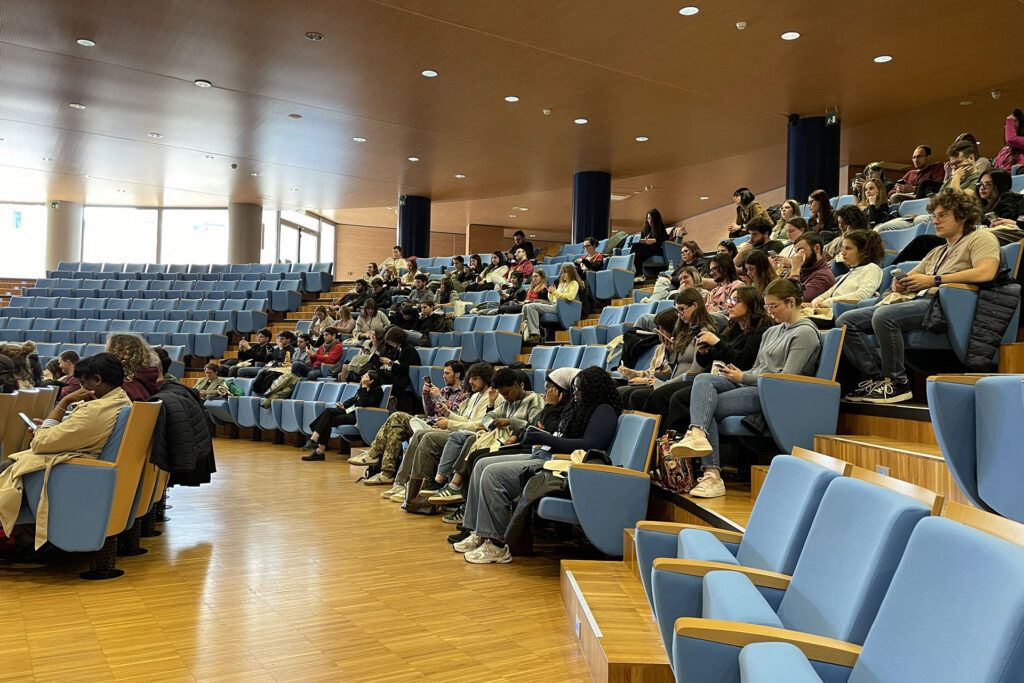
ISIG participated in international events focused on the development and validation of the methodology, including the workshop held in Chișinău in March 2026, which brought together representatives of public authorities from the participating countries and project experts.
The process continues with an integrated analysis of the pilot’s results and their dissemination through national profiles and tools to support policy dialogue. On November 2, 2026, as part of the Council of Europe’s World Forum for Democracy in Strasbourg, RESIST will also be the focus of the session “Strengthening Societal Resilience to Disinformation – for Informed Choices About Our Future,” dedicated to the relationship between resilience to disinformation and democratic foresight.
Links
Official project website: Council of Europe – RESIST: Strengthening Societal Resilience to Disinformation in Europe