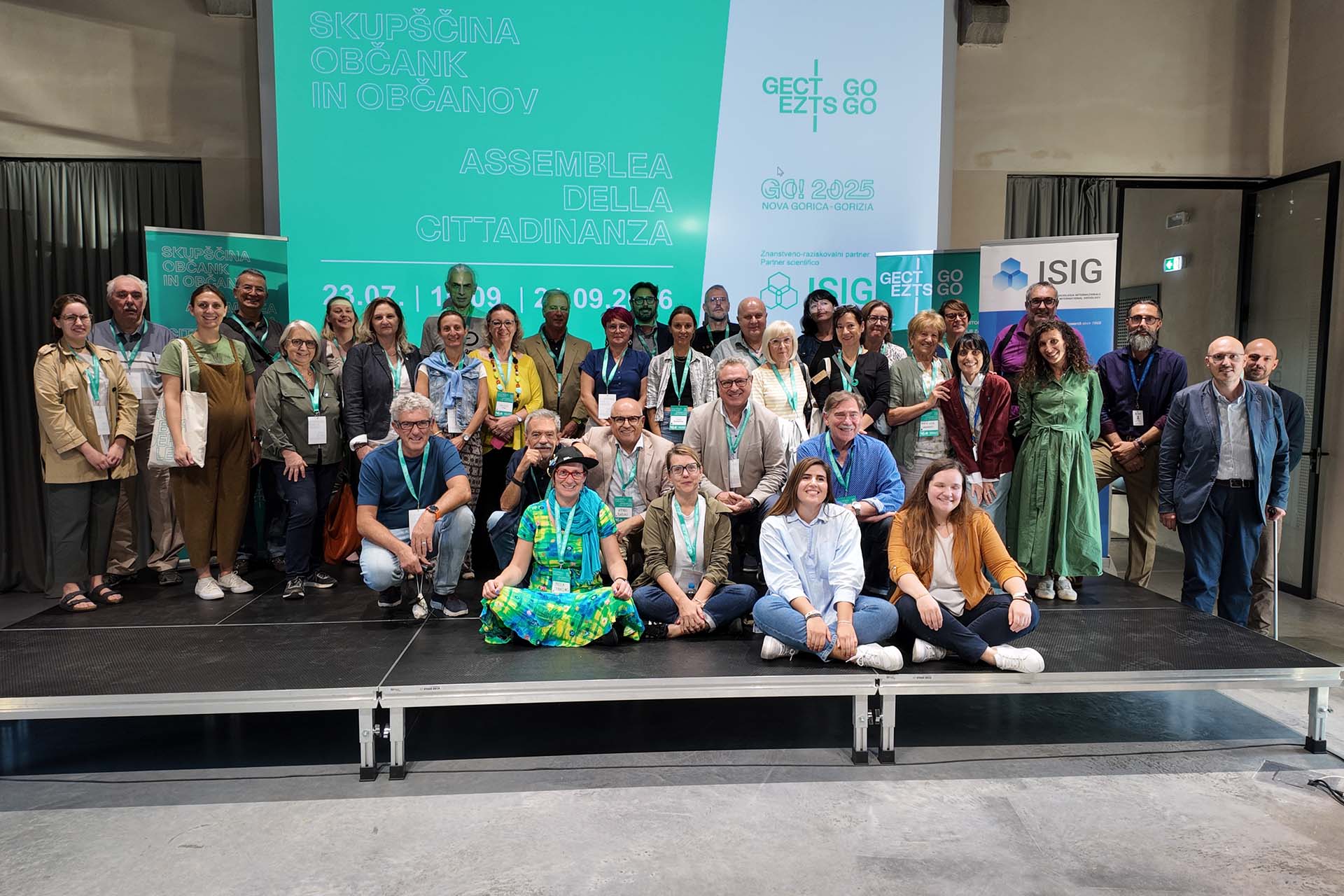
On April 21 and 22, the Uccellis Institute in Udine hosted “Learning Cities – ACT,” a two-day event dedicated to active learning, dialogue with the local community, and European citizenship. The initiative, organized in collaboration with researchers from ISIG—the Institute of International Sociology in Gorizia—offered a comprehensive and highly experiential training program.
A Closer Look at the European Union: History, Values, and Opportunities
The first phase of the project allowed students to gain a deeper understanding of how the European Union works from a practical and accessible perspective. The course covered the key moments in its formation, the reasons for cooperation among states, and the fundamental values that underpin it.
Particular attention was given to opportunities for young European citizens: programs such as Erasmus+, DiscoverEU, the European Solidarity Corps, and internships at EU institutions were presented as concrete tools for personal growth, training, and mobility.
Learning Cities and Lifelong Learning
Building on this framework, the workshop introduced the concept of UNESCO Learning Cities, prompting a discussion on lifelong learning as a process that is not limited to school settings but extends throughout one’s life and across various community spaces.
The focus then shifted to the link between global goals and local actions: how major international challenges can be translated into concrete actions on the ground, and how young people can become key players in this change.
From Problem Analysis to Design
The second part of the course was devoted to participatory design. The students worked on real-world cases, learning how to analyze a problem, identify its causes, define a clear objective, and develop a coherent intervention strategy.
This approach has made it possible to develop essential transferable skills: critical thinking, collaboration, and a solution-oriented mindset, with a constant focus on the feasibility of the proposed actions.
Ideas for a Learning City
At the end of the two-day event, participants worked in groups to devise a micro-action that could help transform their local area into a true Learning City.
The proposals submitted demonstrated creativity, awareness, and practicality: projects built around the idea of lifelong learning and rooted in the real needs of the local community.
Conclusion
“Learning Cities – ACT” was an intense and engaging educational experience that successfully combined theoretical knowledge with practical application. The program placed young people at the center as active agents of change, highlighting their role in building communities that are more inclusive, aware, and committed to lifelong learning.