How do you handle an emergency that involves neighboring areas, different local governments, and rescue teams from two countries? The answer lies in preparedness, mutual understanding, and the ability to share procedures, tools, and information.
On July 15 and 16, 2026, Monfalcone hosted two working days as part of the KARST ADAPT project, focused on risk management, cooperation between Italy and Slovenia, and strengthening the resilience of local communities.
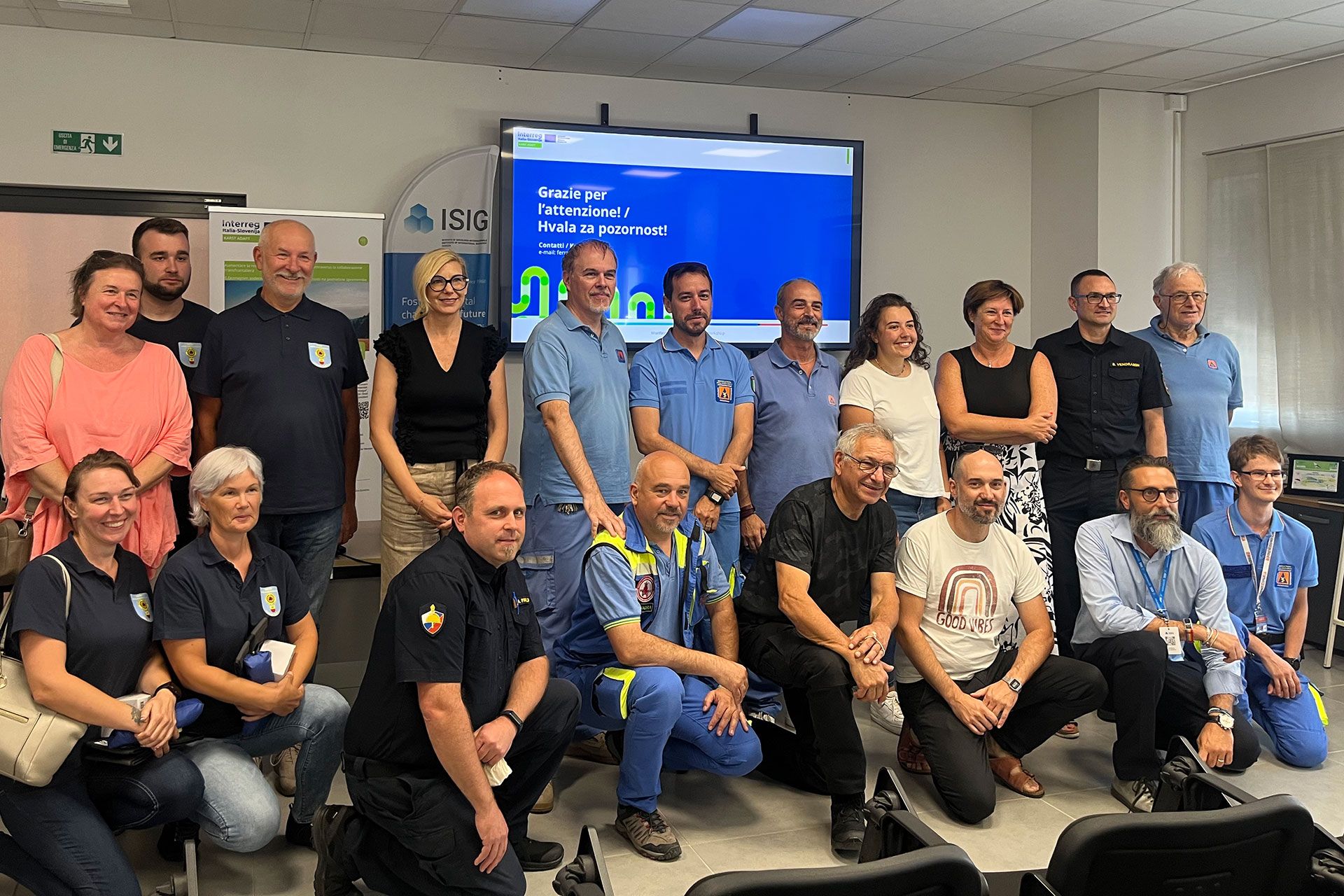
Representatives from municipal administrations, civil protection agencies, fire departments, and project partners engaged in discussions through presentations, technical visits, simulations, and participatory activities. This process made it possible to integrate operational expertise, local knowledge, and communication tools, transforming diverse experiences into a shared resource.
Day 1: Coordinating Before an Emergency
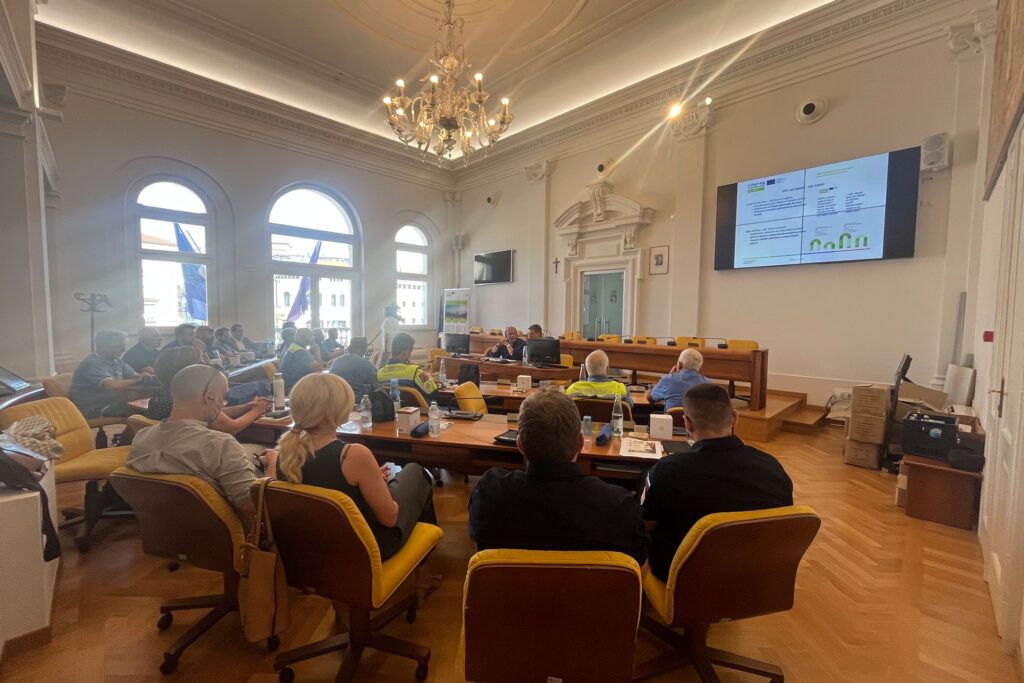
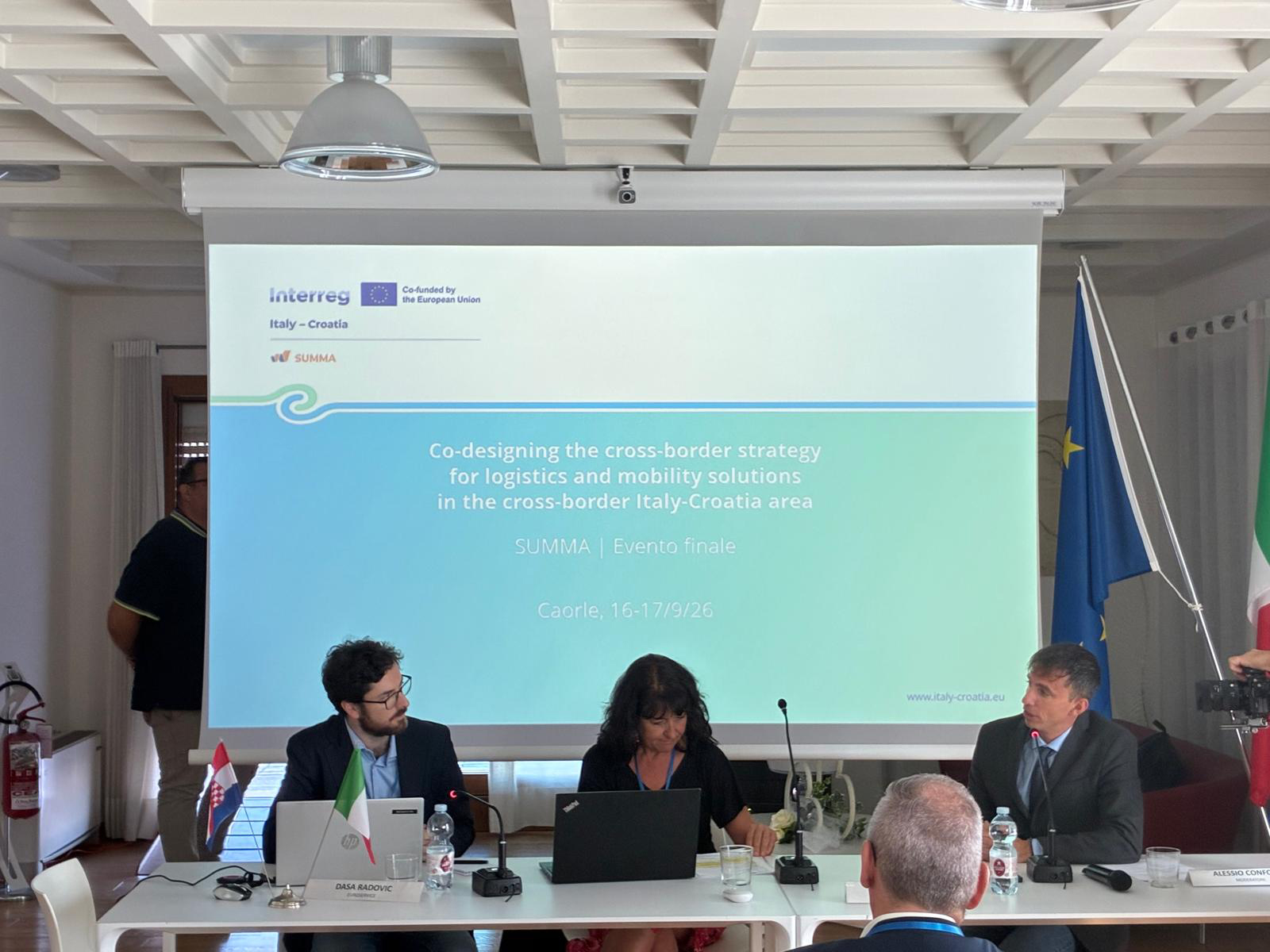
The first day of the event, on July 15, began in the Council Chamber of the Monfalcone City Hall with official remarks from the mayor and the city administration.
The opening remarks introduced some of the project’s key themes: the role of the regional Civil Protection agency in fire risk management and the activities carried out by KARST ADAPT to improve the capacity of cross-border regions to prevent and respond to emergencies.
Wildfires and other extreme events do not stop at administrative boundaries. For this reason, collaboration among agencies, emergency services, and local communities is an essential component of risk management, especially in a shared territory such as the one between Italy and Slovenia.
A Cross-Border Protocol for People, Animals, and First Responders
One of the highlights of the morning was the presentation of the Cross-Border Action Protocol for the evacuation of animals and protection and rescue teams.
Developed as part of the KARST ADAPT project, the protocol was created with the goal of strengthening coordination between Italy and Slovenia during emergency situations. Establishing responsibilities, operational methods, and shared procedures in advance allows for faster response, reducing uncertainty and facilitating collaboration between teams from different organizational structures.
Managing evacuations requires planning that takes numerous factors into account: the safety of people, the protection of animals, the accessibility of the affected areas, the availability of resources, and the protection of the rescue workers themselves.
The protocol therefore serves as a practical tool for transforming cross-border cooperation into coordinated and immediately implementable actions.
From Equipment to Operational Scenarios
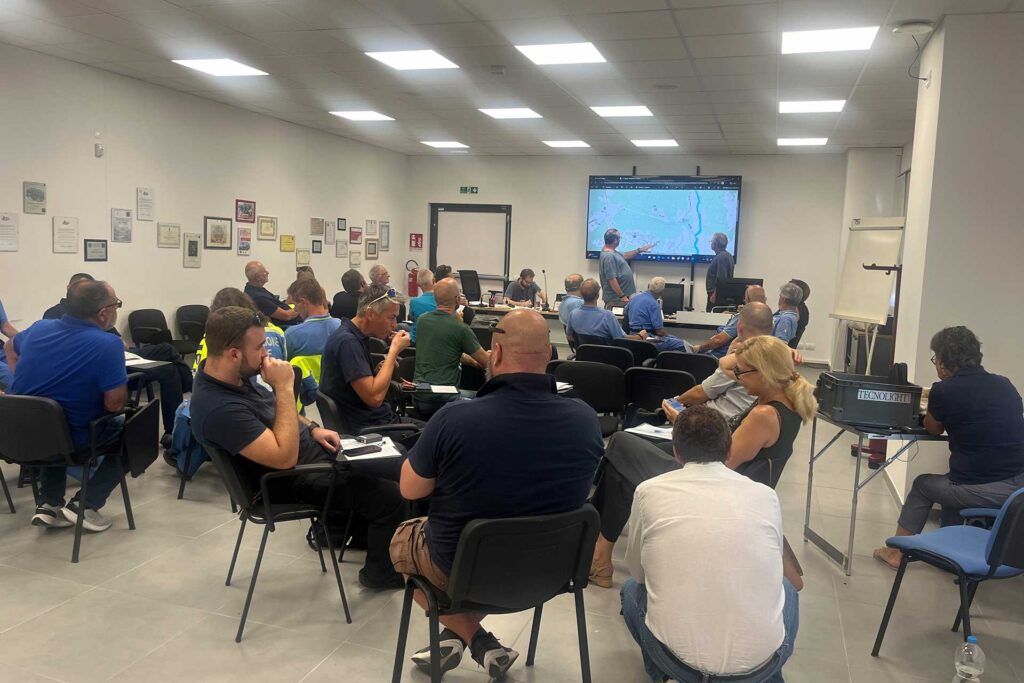
In the afternoon, the participants visited the Civil Protection headquarters in Monfalcone, where they were able to get a closer look at the supplies and equipment acquired through the project.
The visit made it possible to link strategic planning to the operational aspects of emergency management. Resources, systems, and technologies are truly effective when they are supported by trained personnel, clear procedures, and a shared understanding of their respective response capabilities.
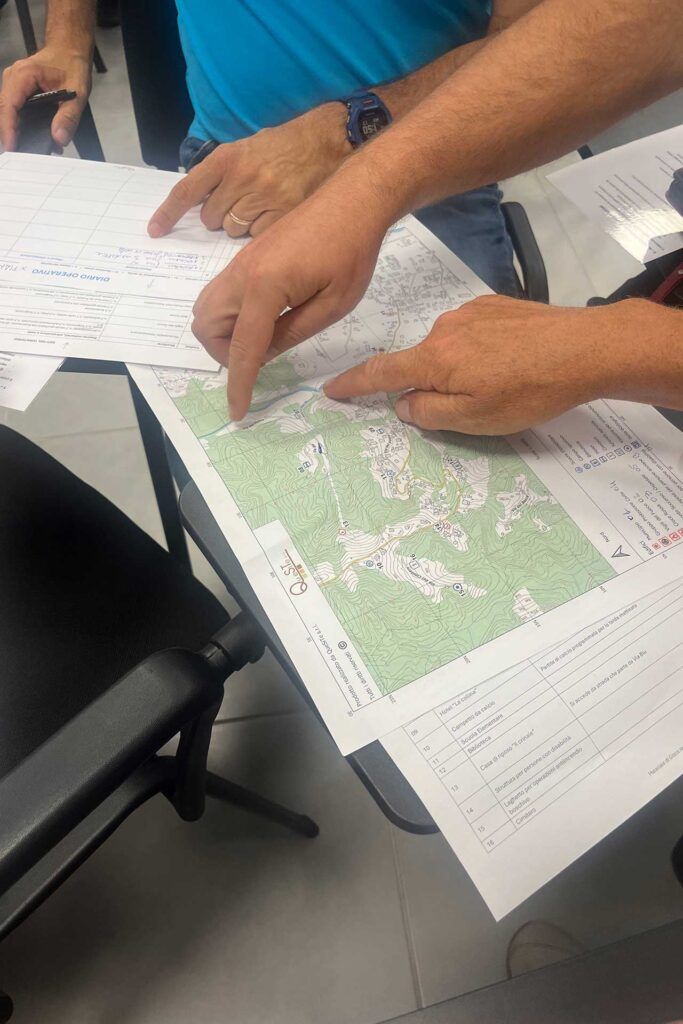
The day continued with a serious gaming session, a methodology that uses simulated scenarios to analyze behaviors, decisions, and coordination dynamics.
Representatives from the project partners, the Monfalcone Civil Protection Agency, the Miren Civil Protection Agency, and the Nova Gorica Fire Department faced realistic emergency scenarios, putting to the test the procedures and methods of collaboration among the various parties involved.
Through the simulation, it was possible to identify strengths, potential challenges, and areas for improvement. Serious gaming also allowed participants to observe how decisions made by a team can influence the entire response system, highlighting the importance of rapid communication, clearly defined roles, and reliable information.
Day Two: Understanding Regional Resilience
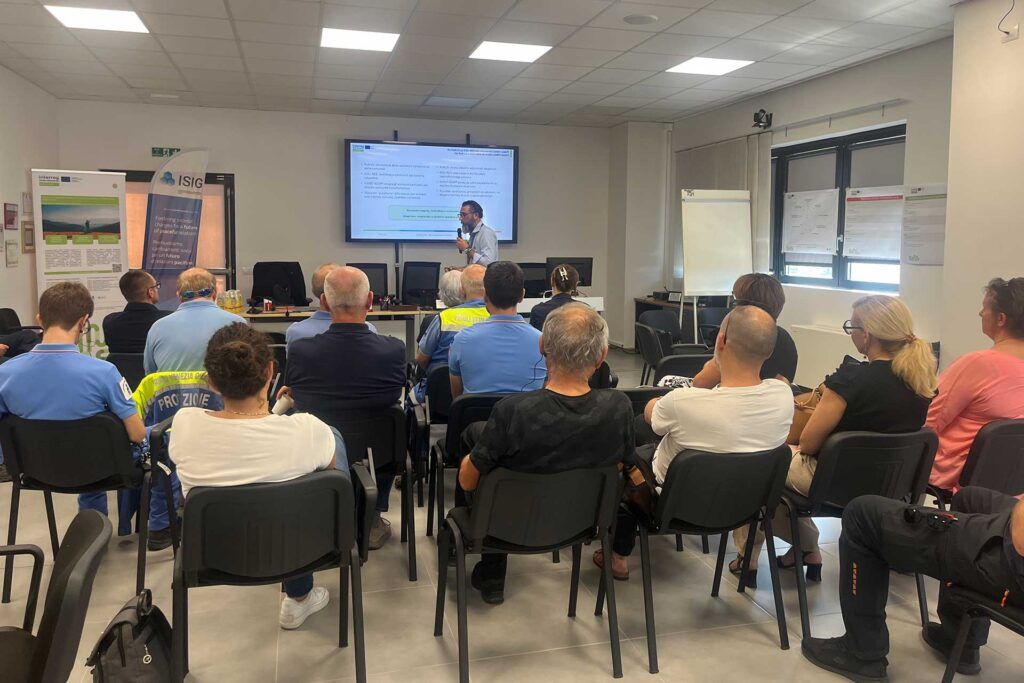
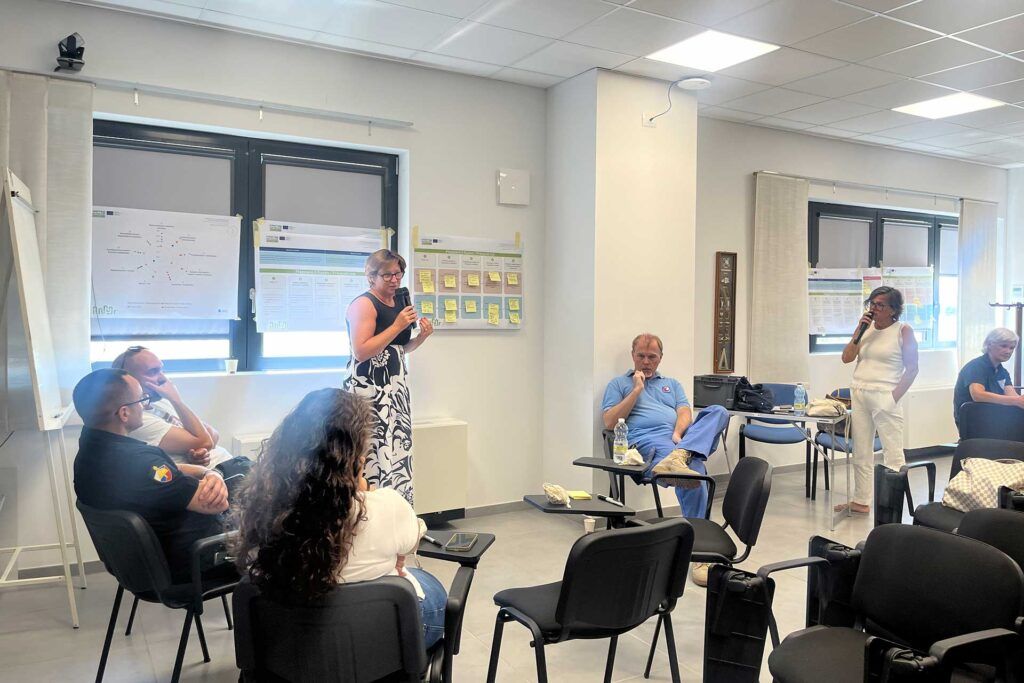
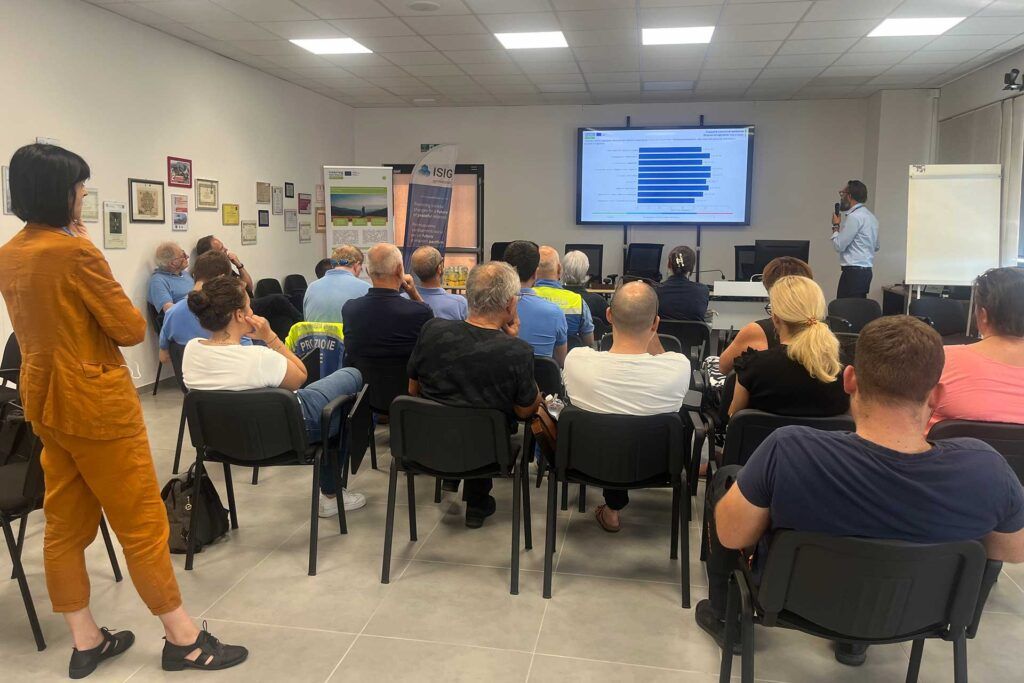
The second day, July 16, was dedicated to the activities of WP1, featuring the participatory workshop “Local Resilience and Communication for Risk Management, ” organized by ISIG—the Institute of International Sociology in Gorizia.
The meeting was attended by about twenty representatives from municipal administrations, civil protection agencies, and the project’s Italian and Slovenian partners. Among them were the Monfalcone Civil Protection Agency, the Municipality of Duino Aurisina, the Municipality of Miren-Kostanjevica, and the Nova Gorica Fire Department.
The diversity of expertise and perspectives made the workshop an important opportunity to discuss the challenges shared by cross-border regions. Risk management, in fact, is not limited to the immediate response to events; it also encompasses communities’ ability to prepare for, adapt to, and recover from a crisis.
A Framework for Understanding Vulnerabilities and Resources
The work began with the preliminary results of the questionnaires administered as part of the project.
Divided into groups, the participants helped validate and refine the local resilience matrix, a tool designed to systematically assess the characteristics of local areas, available resources, and sources of vulnerability.
The discussion made it possible to correlate the collected data with the direct experience of those who work on a daily basis in government agencies and in protection and emergency response services. The participants were thus able to identify the main critical issues and define some priorities on which to focus future improvement efforts.
Local resilience is, in fact, the result of numerous factors: the preparedness of institutions, organizational capacity, awareness of risks, the availability of resources, trust between citizens and local governments, and the existence of collaborative networks capable of springing into action in times of crisis.
Communication as Emergency Infrastructure
A second phase of the workshop was devoted to analyzing communication flows among government agencies, civil protection services, citizens, and other local stakeholders.
During an emergency, communication involves much more than simply issuing an alert. It is necessary to gather information, verify it, share it with the relevant parties, and ensure that those involved understand it. Delays, conflicting information, or unclear messages can hinder operations and increase the sense of uncertainty.
The working groups analyzed the processes through which information flows, identifying critical issues and specific needs. The discussion also provided useful insights for the development of digital tools to support emergency management.
The goal is to help create solutions that facilitate the exchange of information, support operational coordination, and improve communication with local communities, taking into account the characteristics and needs of the various regions.
From Shared Experiences to Upcoming Activities
The insights gained over the two-day event provide an important foundation for the next phases of KARST ADAPT.
Operational simulations, vulnerability analyses, and discussions on communication processes will contribute to the development of shared tools to strengthen the resilience of local communities and improve collaboration in managing cross-border risks.
The experience in Monfalcone has shown that emergency preparedness is built through ongoing efforts: by fostering dialogue between institutions and first responders, integrating diverse areas of expertise, and creating opportunities in which procedures and tools can be analyzed and tested together.
We would like to extend our heartfelt thanks to the City of Monfalcone for its hospitality and for organizing the activities, as well as to all those who, through their experience, willingness to help, and participation, turned these two days into an important opportunity for growth and cooperation among the regions.
KARST ADAPT is an Interreg Italy-Slovenia project co-financed by the European Union.
Partners: Municipality of Miren-Kostanjevica | Municipality of Renče–Vogrsko | Municipality of Duino Aurisina – Municipality of Devin Nabrežina | Municipality of Monfalcone.
Associate partners: Public Institution for Firefighting and Rescue Services – Nova Gorica Fire Department | Firefighters’ Association of Slovenia | Municipality of Doberdò del Lago – Municipality of Doberdob | GAL Carso – LAS Kras | Municipality of Savogna d’Isonzo – Municipality of Sovodnje ob Soči | Asso.Di.Ma – National Association of Disaster Managers | Council of Europe | Autonomous Region of Friuli-Venezia Giulia – Regional Civil Protection Agency