Leadership is not studied. It is practiced.
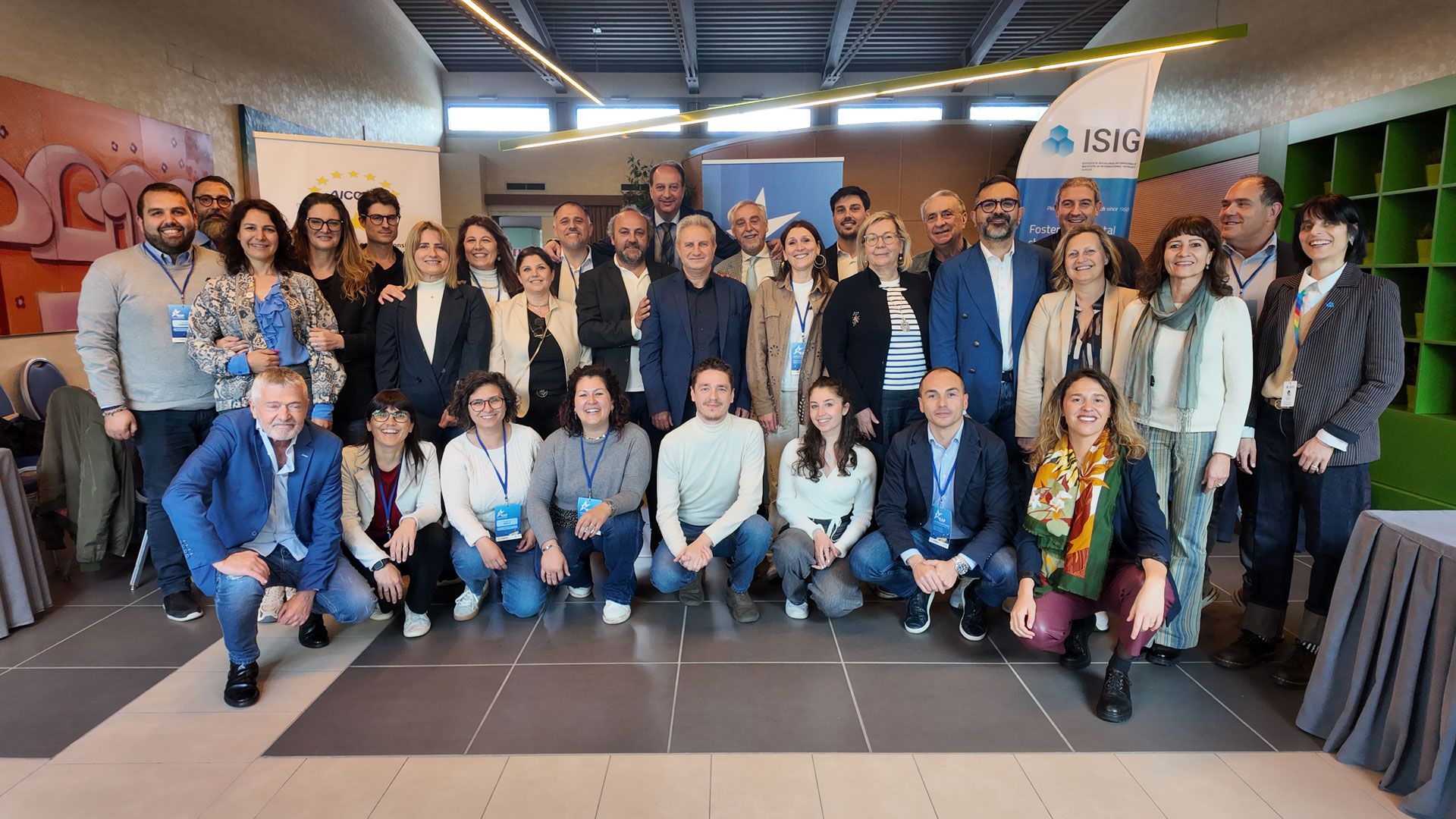
The third and final internship of the European Academy Program (EAP), promoted by AICCRE and implemented by ISIG – Institute of International Sociology in Gorizia, Italy, has concluded in Bologna. Two days of intense work that involved more than 30 Italian municipal administrators in a course dedicated to strengthening leadership, governance and organizational innovation skills.
The initiative was the culmination of a training program designed to support public administrations and civil society organizations in developing concrete tools to address contemporary challenges: from local community management to international cooperation and European planning.
A training course geared to the needs of territories
The European Academy Program was born out of the need to offer specialized, structured and strongly practice-oriented training. The program is designed to accompany administrators and organizations in the development of strategic, decision-making and interpersonal skills essential for operating in increasingly complex and interconnected contexts.
The approach adopted integrates participatory methodologies, experiential learning and collaborative work, with the aim of fostering not only the acquisition of knowledge, but also the consolidation of operational skills immediately applicable in institutional and territorial contexts.
The concluding internship in Bologna was a phase of synthesis and concrete application of the content developed during the previous training sessions.
Day one: experiential learning and collaborative governance
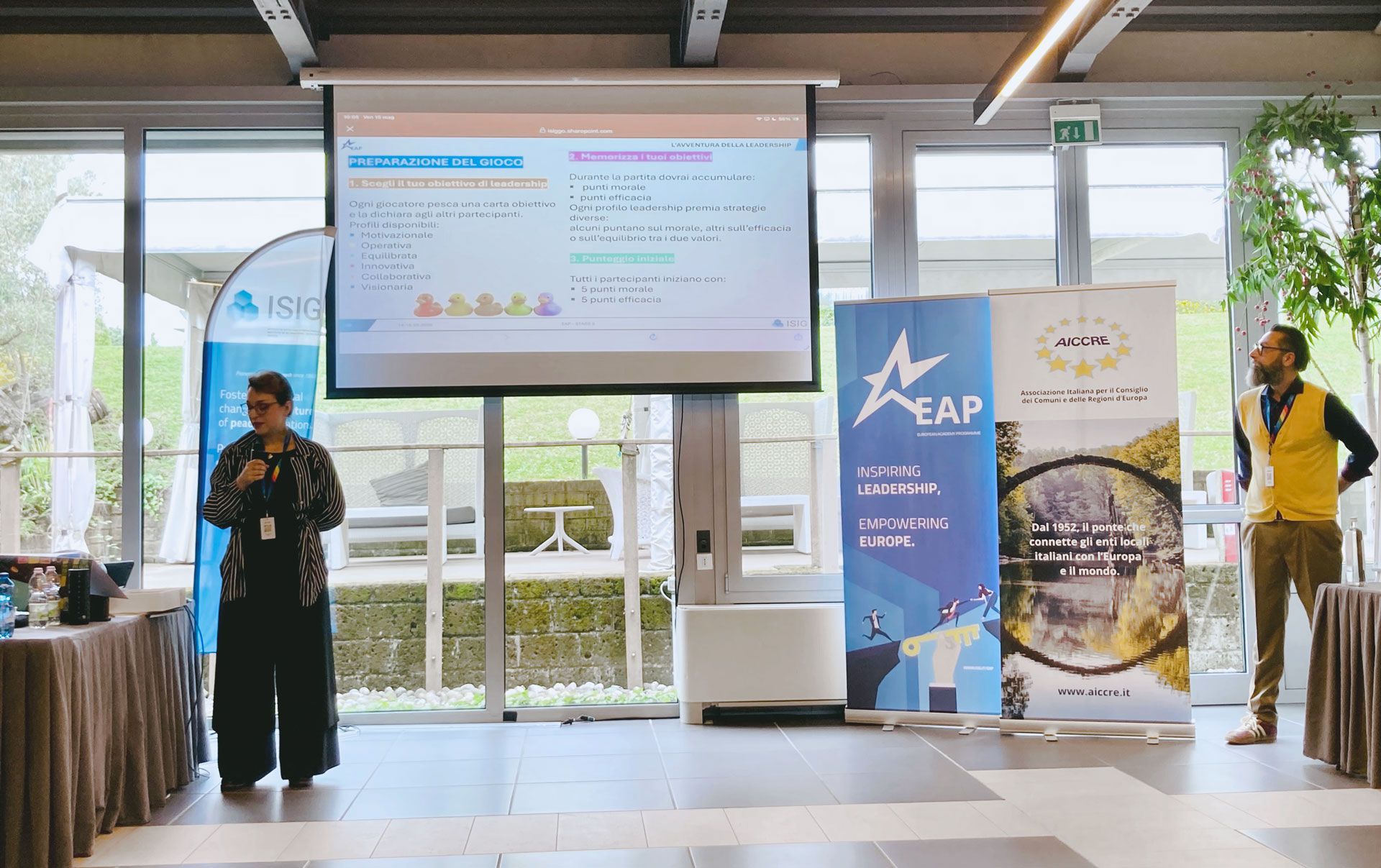
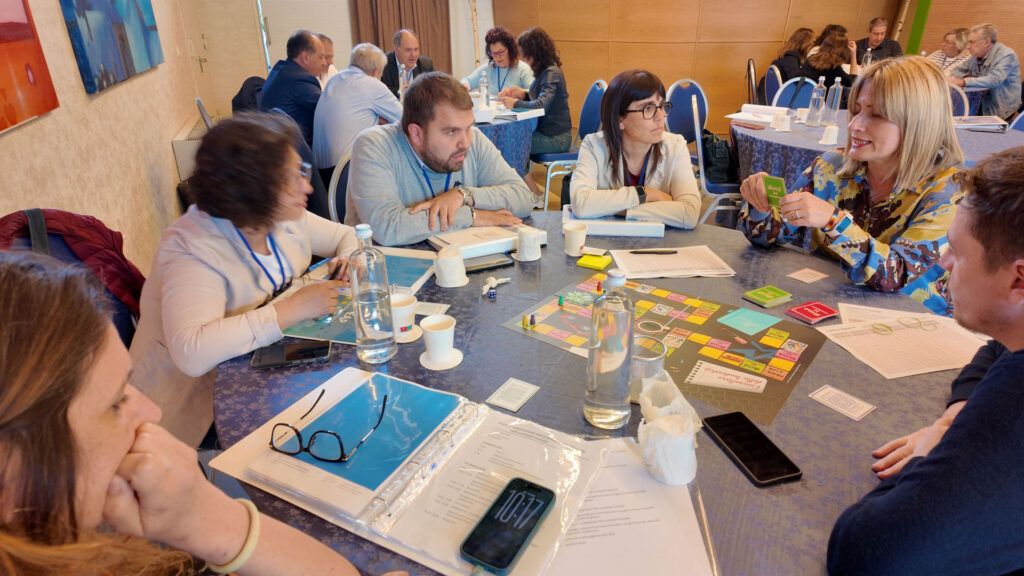
The first day opened with “The Adventure of Leadership,” a serious game designed to stimulate participants to deal with complex scenarios, decision-making processes and conflict management dynamics in simulated organizational settings.
The use of serious gaming as a training methodology enabled direct experience with skills related to leadership, cooperation and democratic governance, fostering learning based on experience and active participation.
Later in the afternoon, work focused on two issues central to local government.
The first focused on building resilient communities, capable of coping with crises and transformations through prevention, adaptation and sustainable development strategies. The focus was on the importance of strengthening the capacity of territories to read vulnerabilities and transform them into effective planning and response tools.
The second theme delved into leadership in territorial and international cooperation networks. In a context of increasingly cross-cutting challenges-environmental, social and economic-the need to develop specific skills in building partnerships, managing cross-border projects and promoting multilevel forms of collaboration emerged.
Day two: European design and strategic vision
The second day was devoted to the topic of European planning, with a focus on the methodologies and tools needed to transform territorial priorities into sustainable and fundable projects.
At the center of the reflection was a fundamental principle: calls for proposals are opportunities, tools that help realize ideas. Projects, on the other hand, should stem from an administration’s vision for its local area: from local priorities, existing capacities, long-term aspirations, and the challenges that communities are trying to address.
This final phase of the EAP focused precisely on that shift in perspective: how to turn a local challenge into a locally rooted opportunity that speaks a European language and can intercept funding of the right magnitude.
The training activity then delved into the importance of building projects consistent with the real needs of communities, enhancing existing capacities, long-term goals and priorities identified by local governments.
The course highlighted how effective planning requires a clear vision of the area and the ability to translate local challenges into opportunities that can dialogue with European policies and programs, avoiding approaches solely geared toward access to funding.
The value of capacity building
The experience of the European Academy Program confirms a vision of capacity building based on strengthening organizational and institutional capacities through processes of active learning, collaboration and strategic development.
The approach promoted by ISIG – Institute of International Sociology in Gorizia is based on the idea that effective leadership does not coincide exclusively with individual skills, but with the ability of organizations to build networks, interpret changes and promote shared innovation processes.
The conclusion of the Bologna internship confirmed the growing interest on the part of Italian local governments in training paths that combine strategic vision, operational skills and territorial cooperation capabilities.