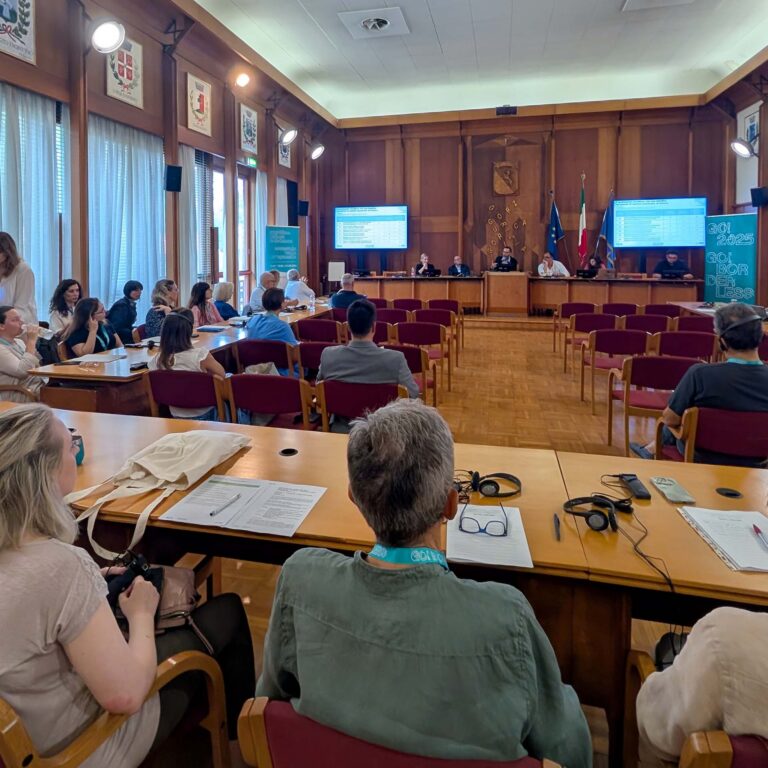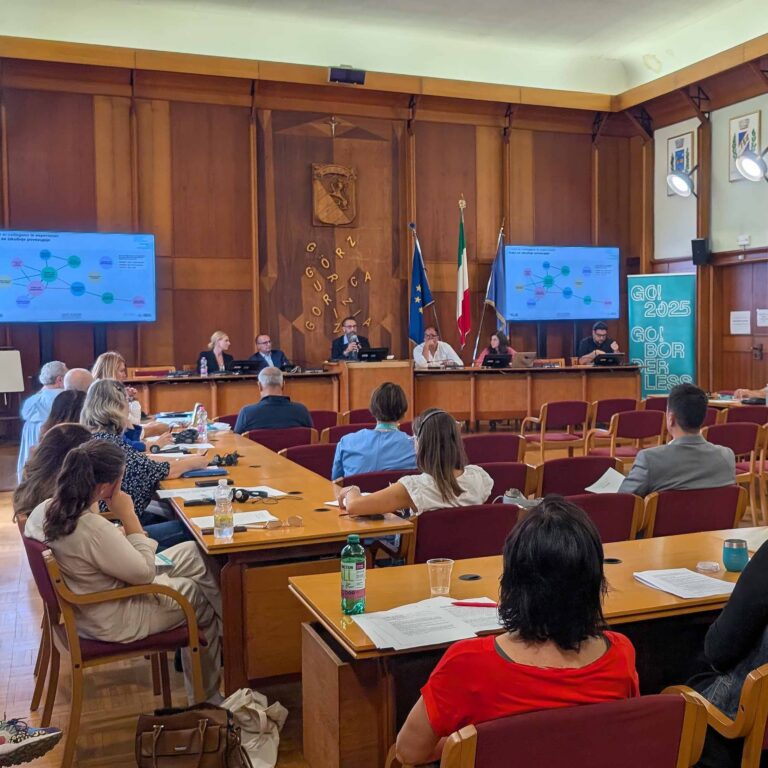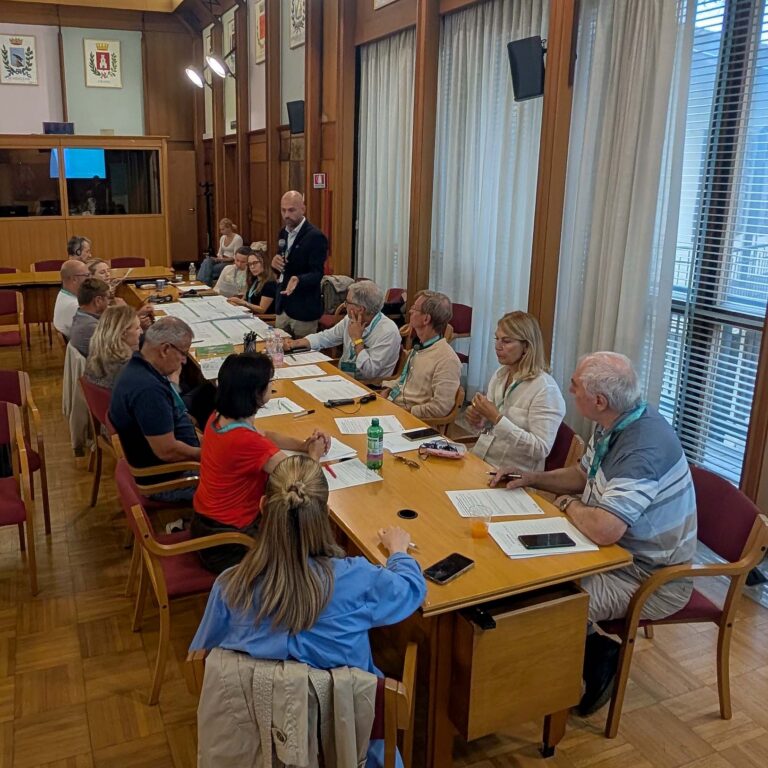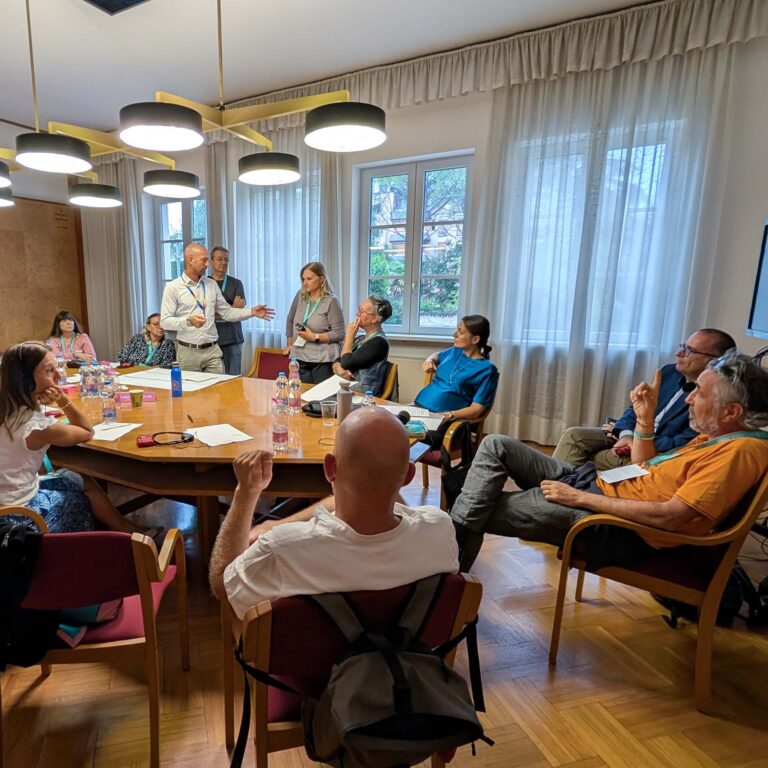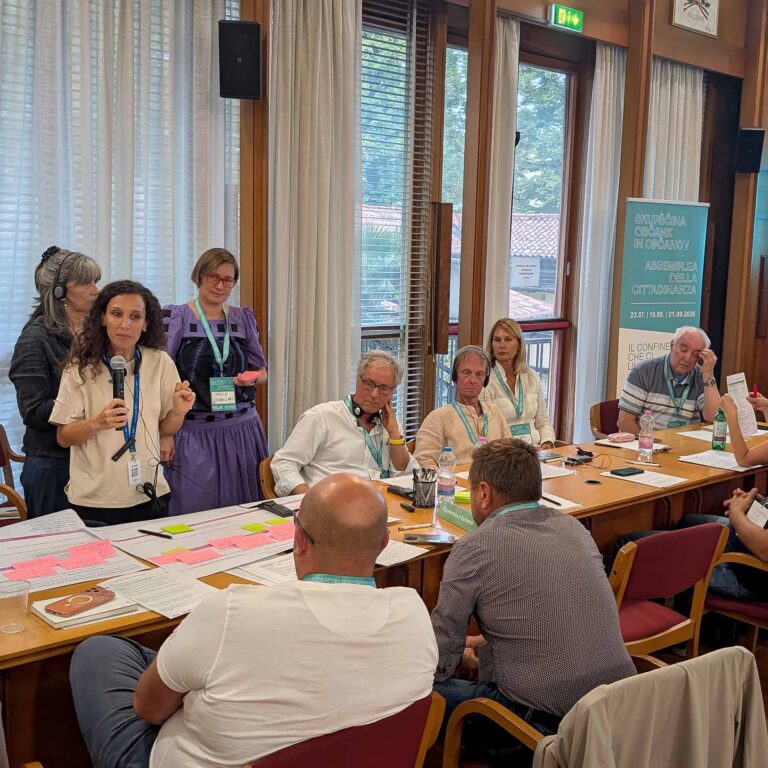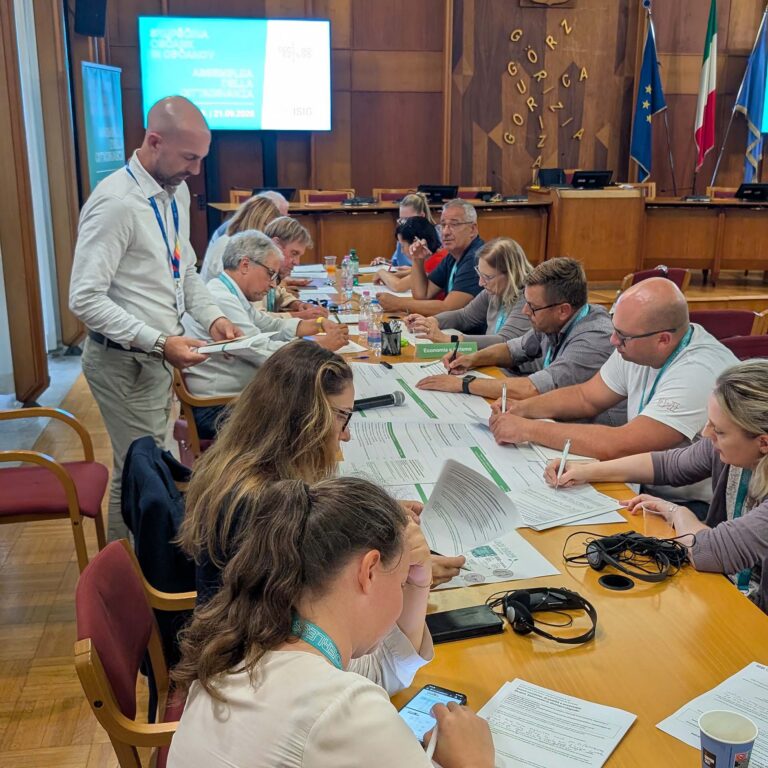
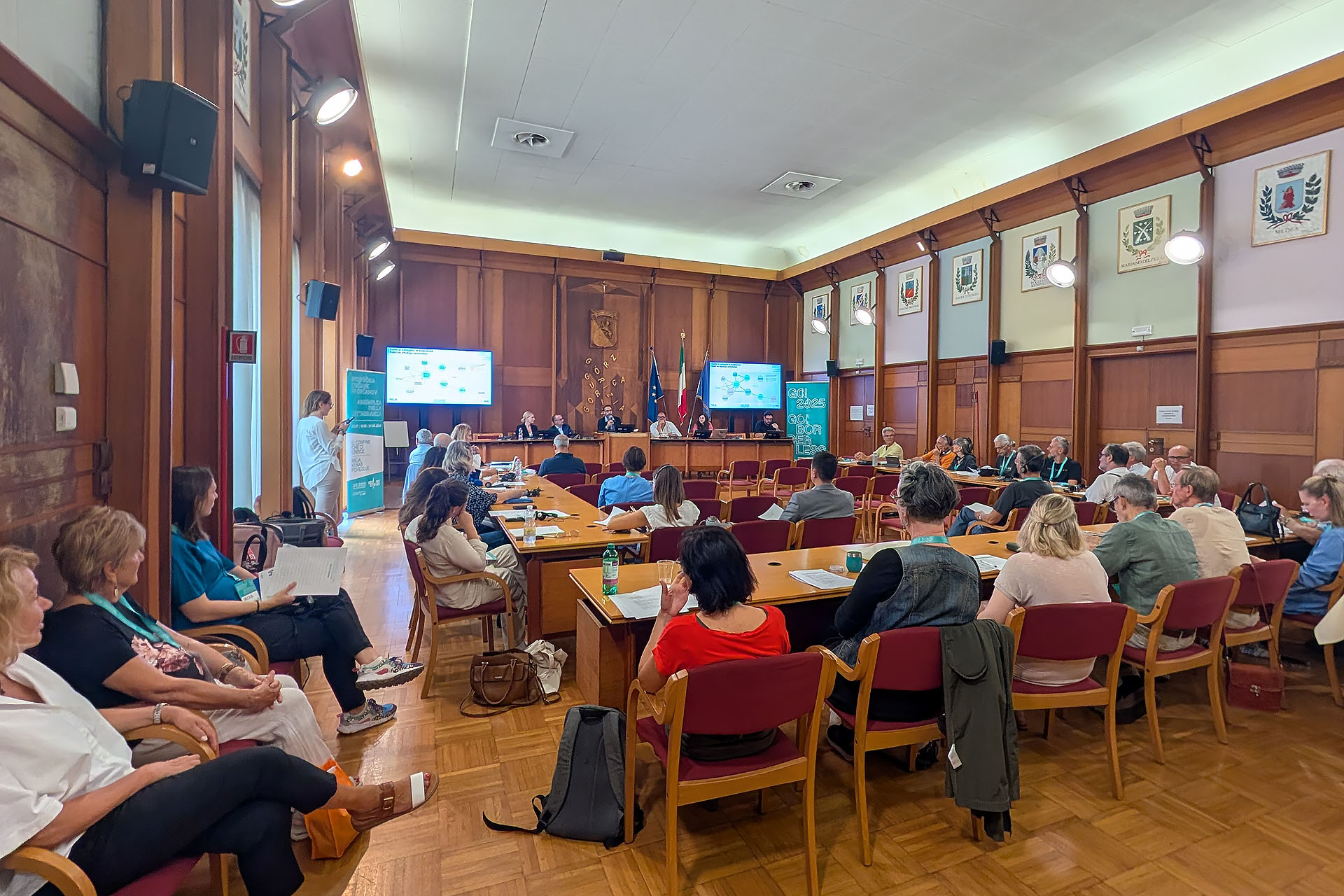
On September 10, 2026, the second meeting of theGO! Citizens’ Assembly 2025, a participatory initiative that brings together people from both sides of the border to reflect on the effects and legacy of the European Capital of Culture.
Following the first meeting on July 23 in Nova Gorica, which focused on gathering experiences and identifying priorities, the second meeting marked the transition from mapping perceptions to verifying them through data, evidence, and expert input.
From the First Meeting to a Deeper Understanding
The work in September picked up directly where the Assembly left off at its first meeting. On July 23, 51 participants had worked on four thematic areas—Economy and Tourism, Civil Society and Community, Culture and Creativity, and Cross-Border Cooperation—gathering 129 concrete examples and identifying a total of 38 priorities.
In the next phase, the collected materials were analyzed and organized into 11 working groups, while maintaining traceability of the original priorities. The analysis revealed several cross-cutting themes: the increasingly tangible experience of a shared territory, as well as the need to improve accessibility, mobility, communication across different languages, procedures, and the continuity of cross-border collaborations.
The second session was therefore designed to bring these experiences into dialogue with additional insights, with the goal of reaching more informed and shared assessments and preparing the ground for the proposals to be presented at the third meeting.
Comparing Data and Experiences
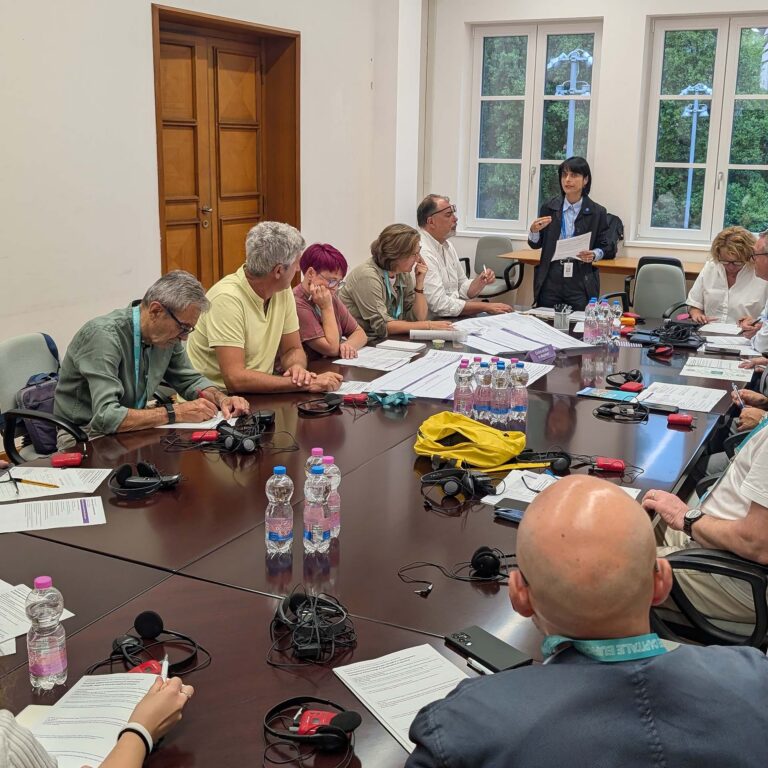
The first part of the meeting was devoted to four in-depth presentations, selected based on the issues that emerged during the participatory process.
Jasmina Nikic (RRA severne Primorske d.o.o., Nova Gorica) and Marco Marinuzzi (cultural policy consultant) explored the relationship between the GO!2025 Official Program, strategic projects, and the program that was actually implemented; Maja Radovanović (GECT GO) presented the experience of the Small Project Fund (SPF), a tool funded by the Interreg Italy-Slovenia program, whose objective was to prepare the cross-border region for the European Capital of Culture Nova Gorica-Gorizia 2025, with a particular focus on projects, networks, and cross-border cooperation; Guido Guerzoni (Formules) presented preliminary findings regarding the social, cultural, economic, and communication impacts of GO! 2025; Finally, Giulio Selvazzo (GECT GO) presented Borderless Wireless, a digital platform and interface for GO! 2025, as an example of shared digital access to the cross-border region.
The presentations were not intended as general overviews of the GO! 2025 program, but rather as tools to address questions that arose directly from the Assembly: an approach that focuses on comparing real-life experiences, available data, and expert knowledge. This is, in fact, the methodological principle guiding the process: transforming the experiences gathered during the first meeting into questions for further exploration and using the evidence to build more robust assessments.
From Evidence to Shared Assessments
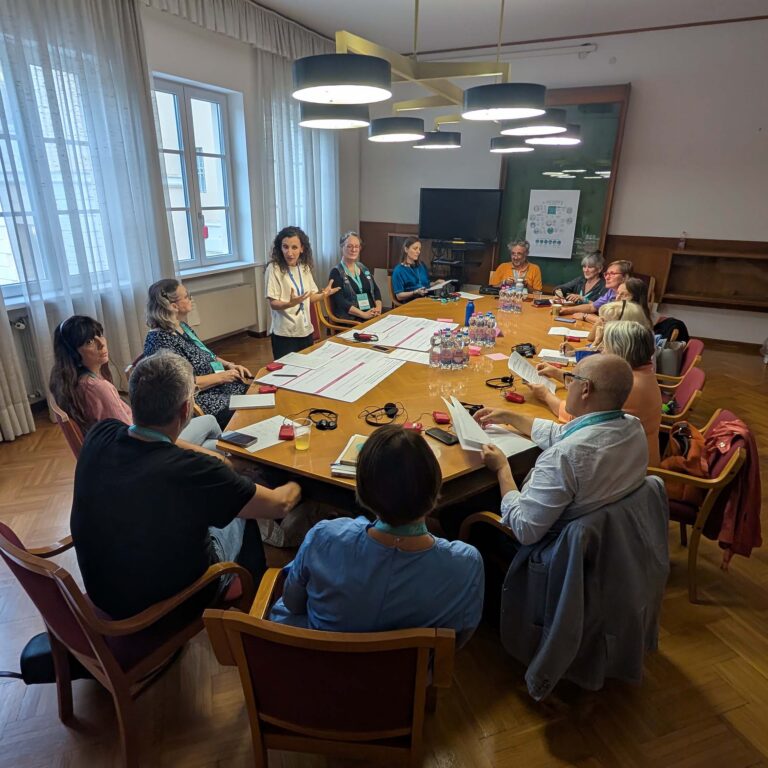
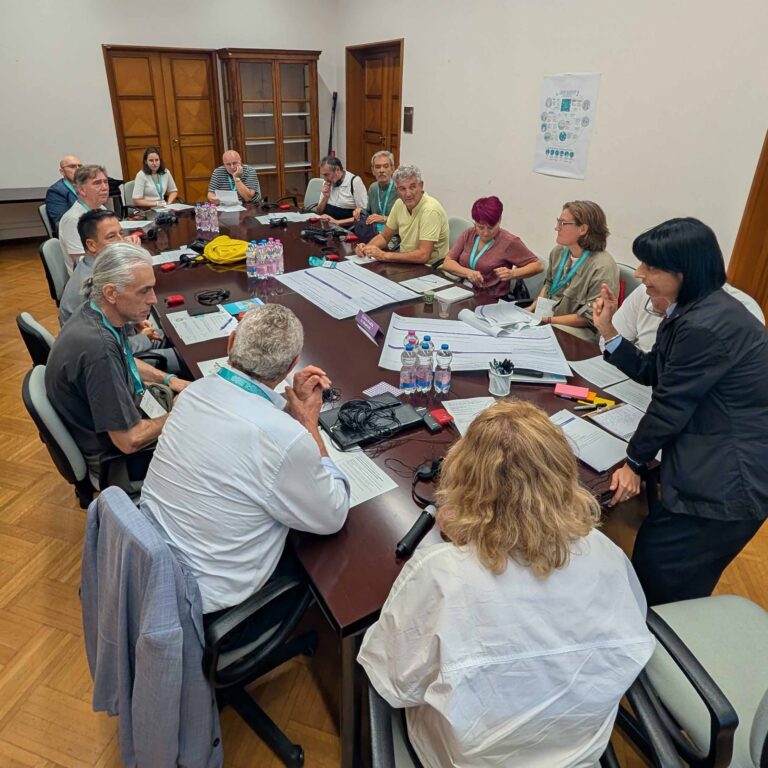
In the second part of the meeting, the participants took center stage again through a World Café session—a structured review and evaluation—organized around three thematic tables dedicated to Economy and Tourism, Civil Society and Community, and Culture and Creativity.
Cross-group collaboration among the working groups made it possible to share the key points and challenges identified during the first session, gathering new input from both participants from other groups and the experts in attendance. Each working group then revised and expanded upon the findings and conducted an assessment guided by common criteria.
The aspect of cross-border cooperation—which was also addressed during the first meeting through a dedicated roundtable—served as a cross-cutting lens for the three thematic areas at this stage. For each priority, the discussion provided an opportunity to explore in greater depth what needs to be shared, coordinated, or modified on both sides of the border so that the work carried out during GO! 2025 can continue to generate value over time.
Toward the Third Match
With this second session, the Assembly thus enters the central phase of the process: from experiences to evidence, and from evidence to shared assessments.
The next step will focus on transforming these assessments into concrete proposals and recommendations for the future of the cross-border region. The goal is not only to understand what GO! 2025 has achieved, but also to identify which experiences, networks, services, and forms of cooperation can serve as a lasting legacy of the European Capital of Culture.
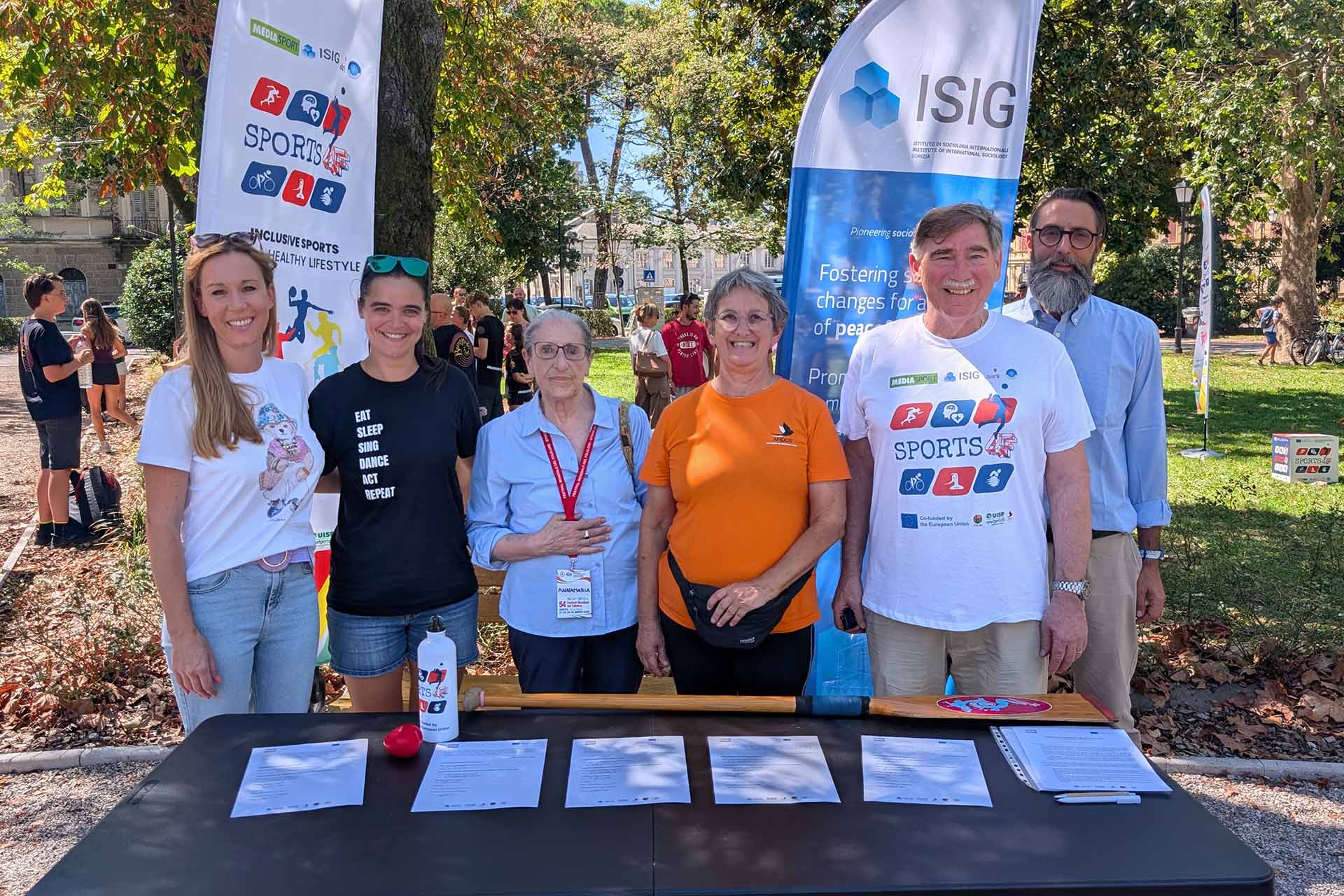
ISIG supports the process as part of the monitoring and evaluation activities for GO! 2025, contributing to the methodological design and facilitation of the Citizens’ Assembly.